
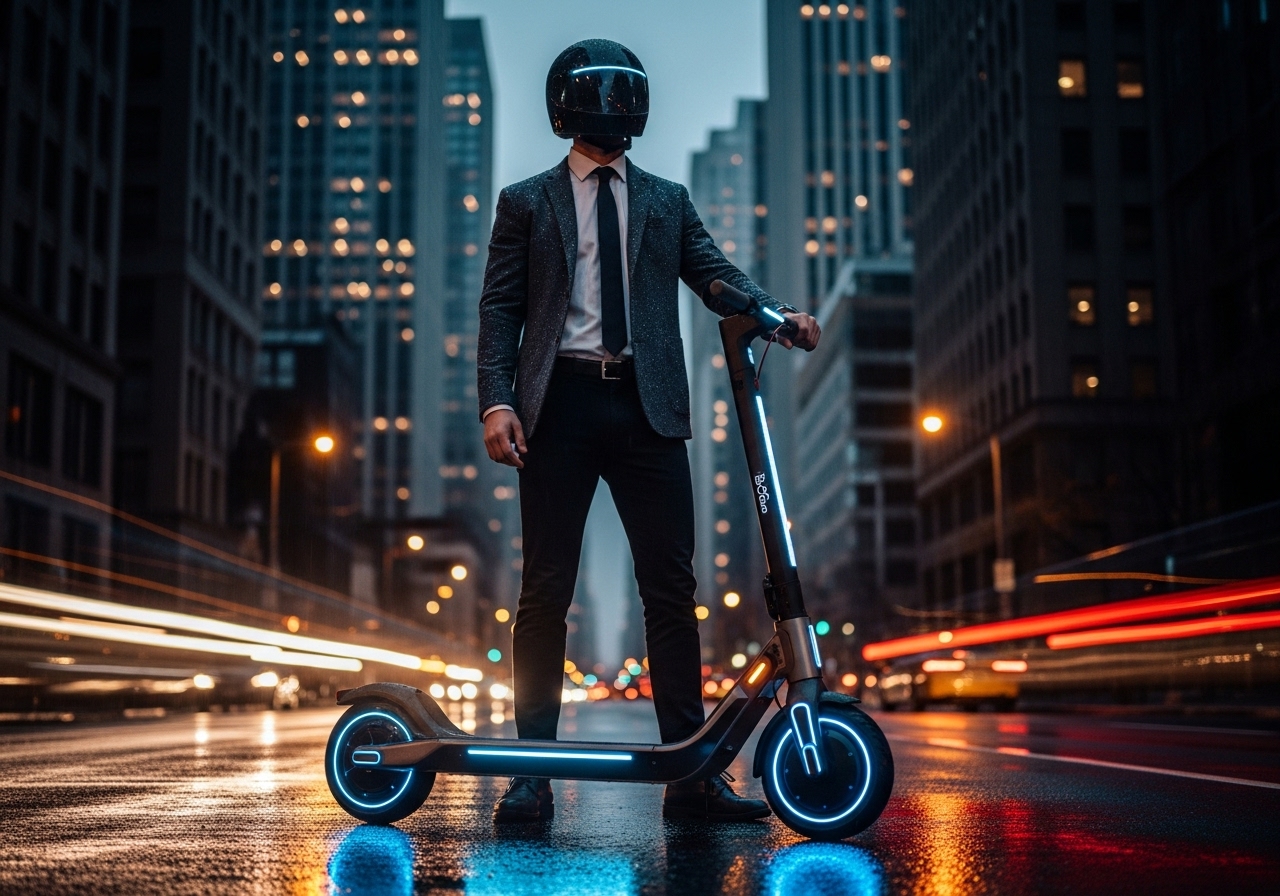
Move over Tesla—there’s a new electric contender on the block, and it’s not a sedan, SUV, or even a pickup. It’s a scooter. That’s right: the Bo Turbo, a British-engineered, 100-mph electric scooter, is making waves in the clean tech transportation market. And while the liberal media giggles at the idea of a “Tesla killer” with handlebars, serious investors and forward-looking entrepreneurs should take notice. This isn’t about fun and games—this is about disruption, innovation, and serious market potential.
Let’s get one thing straight: the Bo Turbo isn’t your kid’s e-scooter. It’s not some flimsy toy zipping around college campuses. This machine boasts stronger acceleration than a Tesla Model 3, travels up to 150 miles on a single charge, and packs a battery capable of delivering the same energy output as charging 1,500 iPhones at once. That’s not hobby-grade engineering. That’s a wake-up call to the electric vehicle (EV) sector.
And it’s not just about speed. The Bo Turbo’s design tackles a glaring market gap that the big players missed—mid-range, high-quality urban transport that’s stylish, functional, and built for real adults. Think of it as the SUV of scooters, a class Bo’s CEO, Oscar Morgan, says didn’t even exist until now. “We wanted an ‘SUV’ scooter, not a Baja truck,” Morgan told *Newsweek*. And by all accounts, they’ve delivered.
From an investment standpoint, this is precisely where opportunity lives: in the overlooked middle. Tesla dominates the premium EV market. Chinese manufacturers flood the low-end with cheap, disposable e-scooters. But Bo is carving out a space for discerning, upscale consumers who want performance without compromise. That’s not a niche—that’s a growth segment, especially in dense urban areas where cars are increasingly unwelcome and unreliable.
Let’s not forget the broader macro landscape here. Under President Trump’s renewed pro-growth, pro-American energy policies, the EV market is becoming less about government subsidies and more about consumer demand and innovation. That’s a good thing. Real market players will rise to the top—not because they lobbied the EPA or got a check from the Department of Energy—but because they built a better product.
Bo’s strategic positioning also reflects a growing trend in personal mobility that investors can’t ignore. We’re not just seeing a shift from internal combustion to electric—we’re seeing a shift from ownership to optimization. Consumers—especially younger, urban professionals—aren’t just looking for cars anymore. They want versatile, efficient, and exciting ways to get from point A to B. Bo’s target audience? Lawyers, surgeons, company directors. In other words, people with disposable income and a taste for cutting-edge tech.
Now, let’s talk dollars. The base Bo M model starts at $2,249. That’s not cheap, but it’s also not out of reach. For comparison, a decent e-bike from a reputable brand can easily cost more. For urban professionals who want to ditch the gridlock without compromising on style or performance, this price point is more than reasonable. And as Bo scales production and captures more market share, expect that price-to-performance ratio to improve.
There’s also a branding angle here that’s worth noting. Bo isn’t trying to be everything to everyone. They’re targeting innovators, early adopters, people who take pride in being ahead of the curve. That kind of brand loyalty—when executed well—creates durable value. Just ask Apple.
But here’s the kicker: unlike bloated EV startups that burn through billions chasing mass-market fantasies, Bo’s approach is lean, focused, and product-driven. They spent 18 months developing the Turbo—not to win headlines, but to solve a real-world problem. That’s the kind of discipline and vision that builds real companies, not just IPO hype.
In the end, whether Bo becomes the “Tesla killer” or not is beside the point. What matters is that it represents the next phase of electric mobility: smarter, sharper, and more attuned to the needs of modern consumers. For investors with an eye on emerging trends and a nose for real innovation, Bo isn’t just a scooter company. It’s a signal.
Ignore it at your own risk.



Comments are closed.