
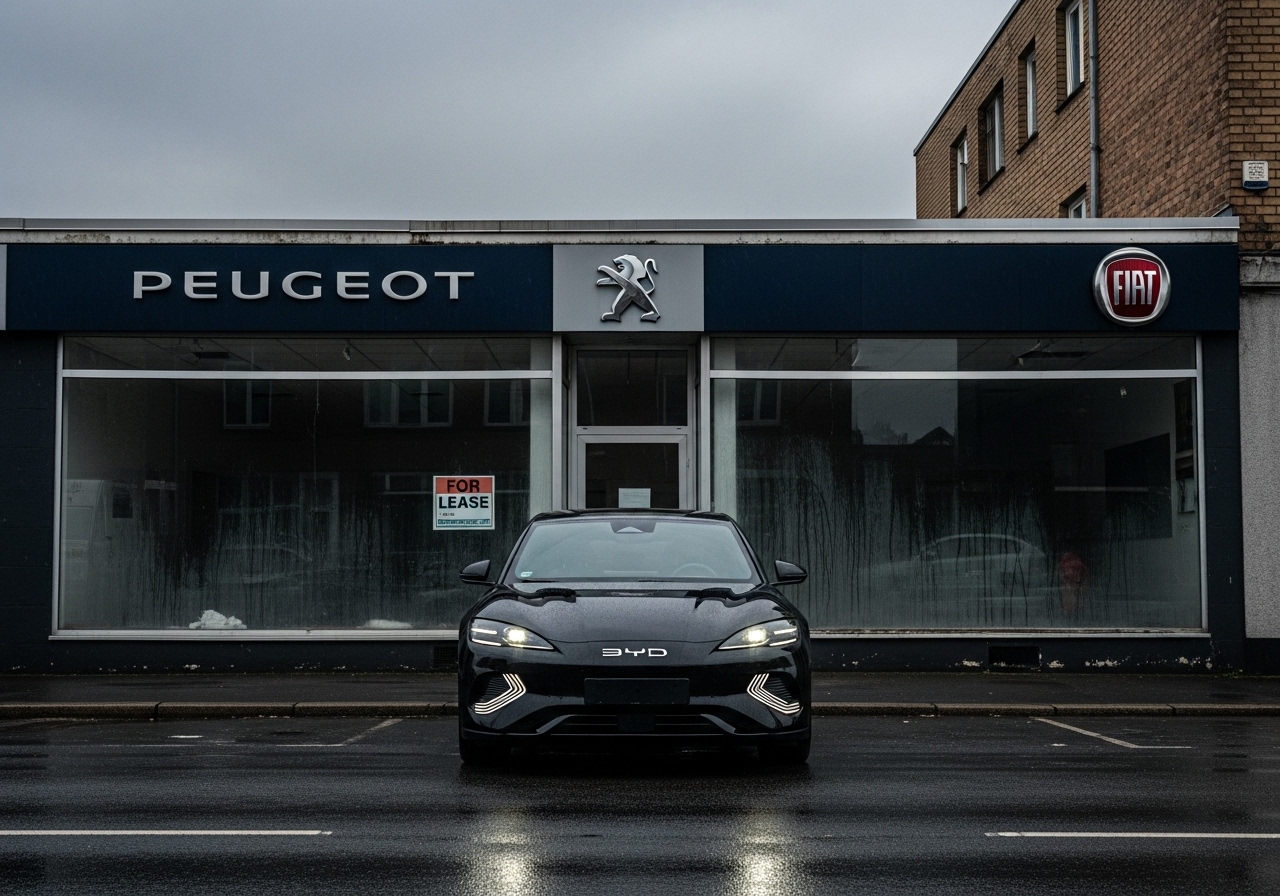
Europe’s once-dominant auto industry is in retreat, and China is moving in fast. That’s not just a headline—it’s a wake-up call for anyone with skin in the global markets. According to fresh data from JATO Dynamics, European car registrations dropped 4.4% year-over-year in June 2025, and while the continent’s legacy automakers flounder, Chinese brands are surging. Investors, take note: this isn’t just a European problem. It’s a geopolitical and financial shift with real consequences for global markets, trade policy, and portfolio positioning.
Let’s get into the numbers. Chinese automakers now command 5.1% of the European car market—just a hair behind German mainstay Mercedes-Benz at 5.2%. That’s not a rounding error. That’s a strategic beachhead. And the pace of growth is staggering: vehicle registrations from Chinese companies are up 91% in just the first half of 2025. BYD alone posted a 311% year-over-year jump, registering over 70,000 units from January through June.
Meanwhile, established players are losing ground. Stellantis, parent to brands like Peugeot, Fiat, and Chrysler, saw its market share fall from 16.7% to 15.3%. Tesla, once the face of the EV revolution, has slipped to 1.6%, down sharply from 2.4% in the same period last year. The much-hyped updated Model Y failed to give Tesla the sales bump it was banking on, and with BYD and Volkswagen taking chunks out of its market, the shine is starting to wear off.
So what’s driving this? For starters, price. Chinese EVs come in cheaper, and in a Europe still dealing with persistent inflation and economic stagnation, that matters. Consumers are price-sensitive, and Beijing-backed brands are flooding the market with affordable electric options. It’s textbook mercantilism: subsidize domestic production, flood foreign markets, and undercut the competition. Europe helped write the playbook—and now they’re on the receiving end.
This is more than just a consumer trend. It’s a geopolitical flashpoint. The European Union slapped tariffs on Chinese EVs earlier this year in a bid to protect local manufacturers, prompting predictable outrage from Beijing. Trade tensions are rising, and with them, uncertainty in the market. Investors should understand: this isn’t resolving anytime soon. The EU is caught between its green agenda and its industrial base—and trying to appease both means economic friction is the new normal.
Felipe Munoz of JATO Dynamics summed it up: “Persistently high prices, geopolitical and economic tensions with Europe’s trading partners, and post-pandemic market reality are behind the decline.” Translation: the old market assumptions don’t hold anymore. We’re entering a new phase of globalization—one where ideological alliances matter less than supply chains, and where China’s state-backed aggression in the EV space is disrupting what used to be stable, legacy markets.
For American investors, this presents both a warning and an opportunity. First, the warning: don’t assume Western brands will dominate the EV future. The market is fragmenting, and China is playing to win. Companies with heavy European exposure—especially in the auto sector—are facing headwinds that aren’t going away. Tesla’s decline in Europe is especially telling; it shows that innovation alone isn’t enough when your competitors are willing to eat short-term losses to gain market share.
But here’s the opportunity: with Europe in decline and China overextending, the United States stands as the most stable and investable auto market in the world. Under President Trump, we’ve seen a renewed focus on domestic manufacturing, reduced dependence on adversarial nations, and energy independence that fuels consumer confidence. The Inflation Reduction Act may be dead and buried, but American innovation isn’t. Companies that double down on U.S.-based production and cater to the American consumer—who still prizes freedom, horsepower, and reliability—are poised to thrive.
Bottom line? The EV transition is real, but it’s not going the way the Davos crowd predicted. China’s gaming the system, Europe is stumbling, and the next phase of market clarity will reward those who are watching the real trends—not the hype. Investors need to differentiate between shiny tech narratives and on-the-ground realities. And right now, the reality is this: China is winning the EV market share war in Europe. The question is, will the West wake up before it’s too late?


Comments are closed.