
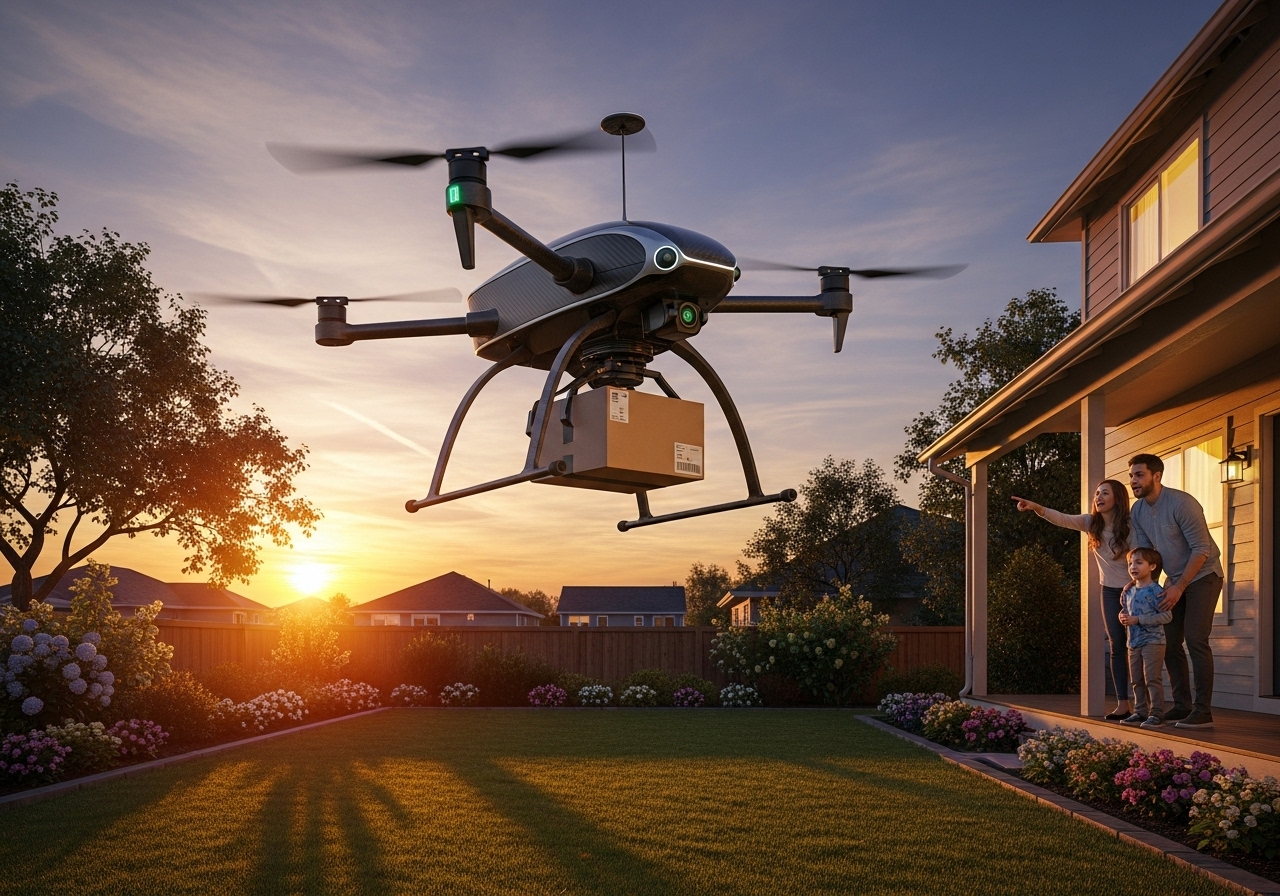
The drone economy just got a major shot in the arm—and if you’re an investor, entrepreneur, or simply someone who understands the power of technology to transform markets, it’s time to pay attention. The FAA’s proposed rule change to allow drones to operate beyond the visual line of sight (BVLOS) without the cumbersome waiver process marks a true inflection point for the unmanned aerial vehicle (UAV) industry. This isn’t just bureaucratic tinkering—it’s a green light for full-scale commercialization.
For years, companies like Amazon, UPS, and a slew of startups have been hamstrung by outdated regulations that forced them to apply for individual waivers just to fly drones out of direct sight. That’s not how innovation flourishes. These waivers were time-consuming, inconsistent, and often politically influenced. Now, under President Trump’s administration, the FAA is moving to normalize BVLOS operations, opening the door for scalable drone services across sectors—from e-commerce to agriculture to emergency response.
This is not theoretical. Amazon’s drone delivery program, Prime Air, has been quietly building toward this moment for over a decade. While early tests in places like College Station, Texas, faced technical hiccups—software bugs, noise complaints, and a few minor crashes—the broader trajectory is clear. The company has already received waivers for limited operations, but scaling nationwide required regulatory clarity. Now, it’s closer than ever.
Let’s talk about what this means for the market.
First, logistics and delivery. The last-mile delivery market is a $100+ billion opportunity, and drones are uniquely positioned to cut costs, reduce delivery times, and reach rural or hard-to-access areas. Amazon’s drone program promises 30-minute delivery windows—a logistical game-changer if executed at scale. Removing the BVLOS barrier means Amazon and its competitors can begin building real drone delivery networks, not just pilot programs. That’s not just good for convenience—it’s a serious margin booster.
Next, agriculture. Drones are already being used to survey crops, monitor soil moisture, and even apply fertilizer. But BVLOS capabilities make it feasible to cover vast farmlands more efficiently, increasing yields and cutting labor costs. For companies in precision agriculture—and for investors in that space—this rule change is a catalyst.
Then there’s infrastructure and energy. Drones are already inspecting power lines, pipelines, and railways—jobs that are dangerous and expensive when done by humans. With BVLOS rules in place, companies can deploy fleets of drones to monitor critical infrastructure in real time. That means fewer outages, faster maintenance, and lower operational risk.
And let’s not forget public safety and emergency response. Drones can assist in search-and-rescue missions, deliver medicine, and provide real-time surveillance during disasters. BVLOS opens the door for drones to be deployed immediately and autonomously—no pilot needed on the scene. That’s capability you can’t put a price tag on.
Of course, safety and security concerns remain. That’s why the FAA is smartly requiring drone operators to be certified, pass background checks, and install collision-avoidance systems. The rule also restricts flights over large public gatherings—common-sense constraints that protect both the public and the industry from bad actors.
This is a textbook example of what happens when Washington gets out of the way and lets American innovation thrive. As Transportation Secretary Sean Duffy put it, “We are making the future of our aviation a reality and unleashing American drone dominance.” That’s the kind of regulatory clarity that fuels economic growth—not from the top down, but from the bottom up.
And make no mistake: this is about more than Amazon or Jeff Bezos. The drone economy touches nearly every sector—manufacturing, software, logistics, agriculture, energy, defense. Investors should be looking closely at companies positioned to capitalize on BVLOS operations, from drone manufacturers to AI software firms to data analytics providers.
The FAA’s proposal is open for public comment for 60 days, but the direction is clear. We’re entering a new era of commercial drone operations—and America, not China, is leading the charge. That’s how it should be.
The signal to the market is loud and clear: the skies are opening up. Whether you’re building, investing, or innovating, now’s the time to take flight.

Comments are closed.